CMMC Compliance Assessment: Self-Assessment vs. Level 2, Which Path Do You Actually Need?
Picture this: your team just spotted a CMMC clause in a new DoD contract solicitation. Someone in the room says, “We’ll just do the self-assessment.” Everyone nods. Nobody checks whether that’s actually allowed.
That assumption is costing defense contractors contracts right now. The CMMC Final Rule became enforceable on November 10, 2025. A hard Phase 2 deadline requiring third-party certification arrives November 10, 2026. With total compliance costs running $34,000 to $112,000 and timelines stretching 6 to 12 months, choosing the wrong path wastes time and money you cannot afford to lose.
TL;DR: Most contractors handling CUI will need a certified third-party assessment, not a self-assessment, and the window to prepare is closing faster than most organizations realize.
The Two CMMC Level 2 Assessment Paths (And Why They’re Not Interchangeable)
CMMC 2.0 has three levels. Level 2 is where most defense contractors live. It covers any organization handling Controlled Unclassified Information and requires compliance with all 110 security practices in NIST SP 800-171 r2.
Here is where contractors get tripped up. Two distinct paths exist under Level 2, and they are not interchangeable choices you get to pick based on preference.
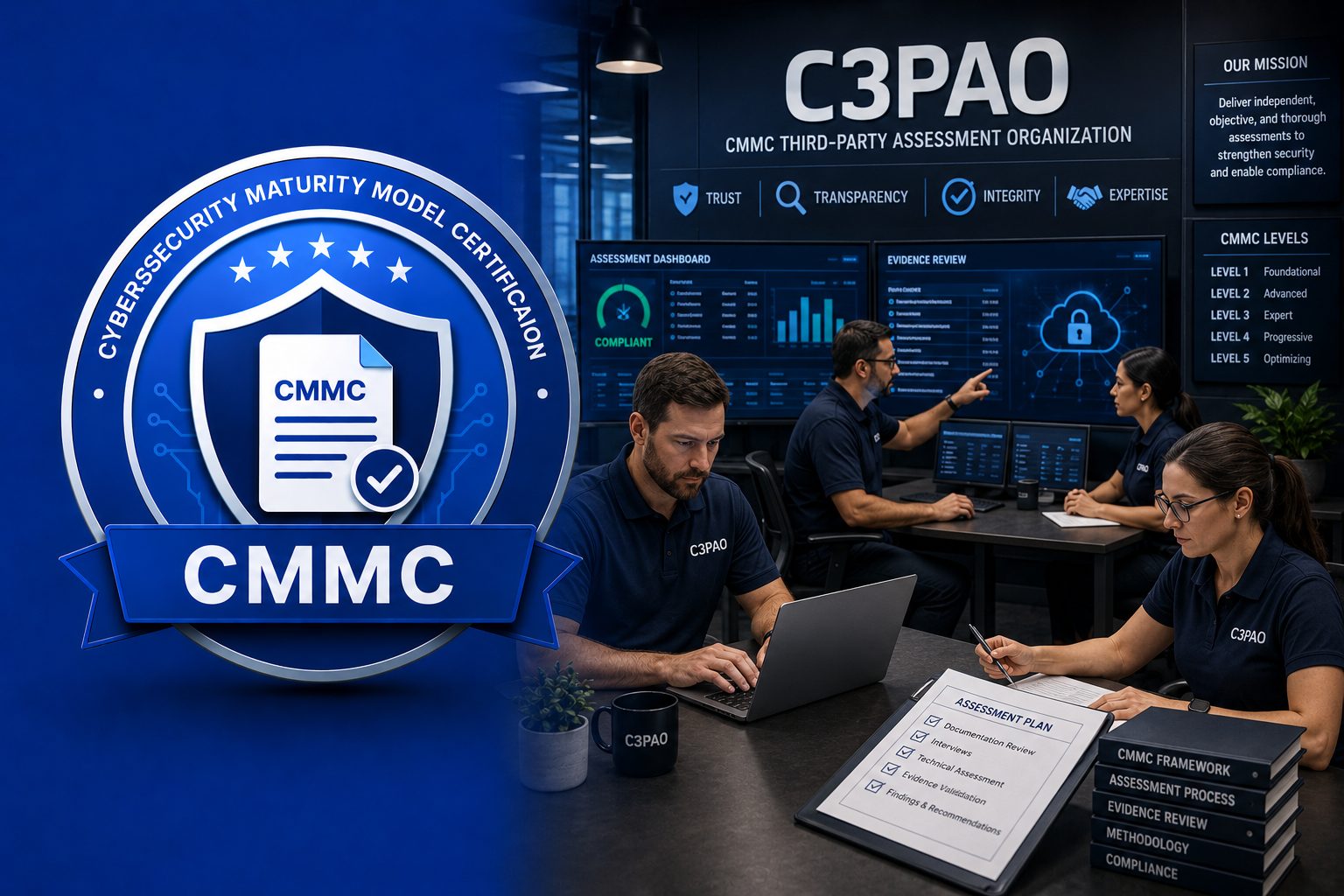
The first path is self-assessment: your organization evaluates itself, scores its own compliance, and submits that score to the Supplier Performance Risk System (SPRS). The second path is a certified assessment conducted by a DoD-authorized C3PAO (Certified Third-Party Assessment Organization). Both paths require implementing all 110 controls. The difference is who verifies compliance and what happens if your interpretation of a control turns out to be wrong.
Both paths also permit Plans of Action and Milestones (POA&Ms) under the same conditions: a minimum score of 88 points, with only 1-point requirements allowed to remain open (with one exception for SC.L2-3.13.11). So the gap between paths is not about the work required. It is entirely about independent verification.
Cost-wise, self-assessment runs $5,000 to $35,000. A C3PAO assessment runs $30,000 to $150,000. That spread matters, but only if you actually qualify for self-assessment, and the odds are not in your favor.
Now that the two paths are defined, the real question is which one applies to your organization. The answer is more constrained than most contractors expect.
Who Qualifies for Self-Assessment, And Why It’s the Exception, Not the Rule
Here is the number that should stop most contractors cold: approximately 70 to 75 percent of companies handling CUI will require a C3PAO certification, not self-assessment. Of the roughly 37 percent of the entire Defense Industrial Base that must achieve Level 2, only about 2 percent qualify for self-assessment. That translates to roughly 9,510 entities over 10 years eligible for self-assessment, versus approximately 182,105 entities that require C3PAO certification.
Self-assessment is not a simpler option you can elect. It is a narrow eligibility category.
The determining factor is your specific contract or solicitation. Specifically, whether the CUI you handle falls within the National Archives CUI Registry Defense Organizational Index Grouping. That grouping has five categories that automatically require C3PAO certification: Controlled Technical Information (CTI), DoD Critical Infrastructure Security Information (DCRIT), Naval Nuclear Propulsion Information (NNPI), Privileged Safety Information (PSI), and Unclassified Controlled Nuclear Information for Defense (DCNI).
CTI is the category that catches most defense manufacturers off guard. If your work involves technical drawings, specifications, or engineering data related to military systems, you are almost certainly handling CTI. That automatically disqualifies you from self-assessment.
Subcontractors face the same rules with no relief valve. You cannot apply for a waiver. If the prime contract requires CMMC, every entity in the supply chain handling covered data must meet the same standard. Waivers exist only at the contract level, require approval from approximately six designated DoD officials, and still require NIST SP 800-171 compliance under DFARS 252.204-7012.
The documented failure mode here is straightforward: contractors misread their contracts or assume CUI categories do not apply to them without doing a formal review. By the time they discover the error, they are already behind.
Once you have confirmed your path, the next question is practical: what does the C3PAO certification process actually demand, and how much runway do you have?
The Level 2 Certified Assessment Process, Timeline, Cost, and What Assessors Actually Look For
What the C3PAO Assessment Involves
A C3PAO assessment is not a questionnaire. Assessors evaluate all 110 NIST SP 800-171 r2 controls across 14 domains, including Access Control, Incident Response, and System and Communications Protection. Before the assessment begins, you must have a System Security Plan (SSP) documenting how each control is implemented in your environment.
Results go to SPRS. Certification is valid for three years, with annual affirmations required. Phase 2 of the CMMC rollout, when C3PAO assessments become mandatory in contracts, begins November 10, 2026. Full mandatory compliance across all DoD contracts arrives November 10, 2028.
The Real Cost of Getting It Wrong
The total compliance cost, preparation plus assessment, runs $34,000 to $112,000 depending on organization size and current security posture. The timeline to achieve compliance is 6 months to 1 year for preparation alone, with the full C3PAO path taking 7 to 20 months from start to certification.
That math has one brutal implication: organizations that begin preparation after seeing a CMMC clause in a solicitation are already behind. Lead time is the single most underestimated factor in this process.
Consider what a late start actually looks like in practice. A manufacturer discovers a CMMC requirement in a contract they want to pursue. They start their gap assessment and discover they are at a 54-point SPRS score against a required 110. Remediation requires new tooling, policy rewrites, network segmentation work, and staff training. The SSP alone takes weeks to document properly. They rush, miss the assessment window, and lose the contract to a competitor who started 18 months earlier.
The most common reasons organizations exceed timelines and budgets are fragmented tools, manual evidence collection, and internal teams without compliance expertise. These are not edge cases. They are the norm for organizations attempting CMMC without dedicated infrastructure.
The compliance burden is real. But it does not have to mean building an internal team from scratch or stitching together a dozen point solutions. The right infrastructure changes the equation entirely.
Frequently Asked Questions About CMMC Level 2 Assessment
How Espresso Labs Gets You to CMMC Level 2, Without Building an Internal Team
If you have read this far, you understand the problem clearly. The path is harder than most contractors assumed. The stakes are real. The timeline is short. And the most common failure modes, fragmented tools, manual evidence collection, and teams without compliance expertise, are exactly what sink organizations that try to manage this alone.
Espresso Labs is built to solve this specific problem. As a fully managed, AI-powered virtual IT, cybersecurity, and compliance team, Espresso Labs replaces the fragmented, expensive approach that most organizations fall back on when CMMC requirements land in their inbox.
Here is what that means in practice. Espresso Labs maps your policies to automated playbooks that enforce CMMC controls continuously, not just at assessment time. That directly addresses the most common failure mode: controls that look good during a certification window but quietly degrade between assessments. Annual affirmation requirements become manageable when your controls are enforced automatically every day.
The SSP documentation burden that stalls most organizations before a C3PAO assessment even begins? Espresso Labs collects audit-ready evidence automatically. Your assessors get a clean, organized evidence package rather than a manual scramble through disparate systems. That alone can shave months off your preparation timeline.
The 24/7 security monitoring and real-time remediation means you stay assessment-ready year-round. And if your organization serves both defense and commercial clients, Espresso Labs handles CMMC alongside SOC 2 and ISO 27001 simultaneously, so you are not running parallel compliance programs with separate tools and teams.
On cost: the $34,000 to $112,000 compliance figure assumes you are managing this with internal staff or point solutions. Espresso Labs delivers enterprise-grade compliance infrastructure at a fraction of that ongoing cost, without the hiring timelines or the expertise gaps that come with building an internal team.
The November 2026 Phase 2 deadline is not far away. If a C3PAO assessment is in your future, and for most contractors handling CUI, it is, the time to build the right foundation is now.