How Much Does NY DFS Compliance Cost?
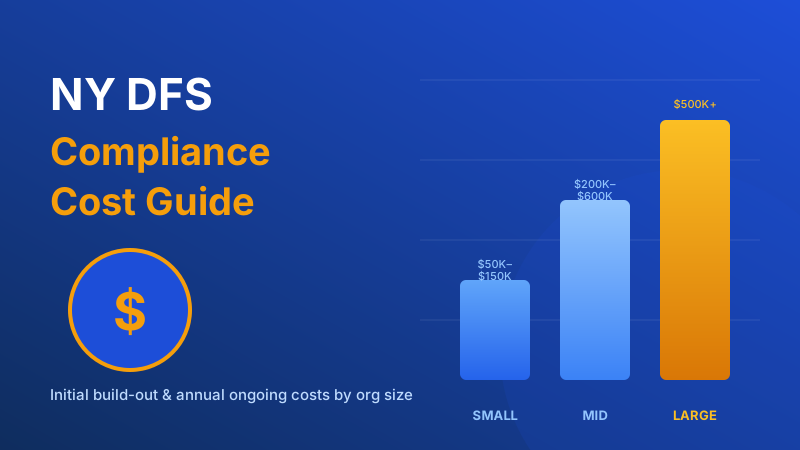
NY DFS compliance costs depend heavily on where your organization is starting from, how many systems are in scope, and whether you build your program internally or use a managed service. A small mortgage broker achieving compliance for the first time faces very different economics than a mid-size insurer maintaining and expanding an existing program.
Typical Cost Ranges
Small Covered Entities (under 50 employees)
Initial build-out: $50,000 – $150,000
Annual ongoing: $30,000 – $80,000 per year
Small firms face the same regulatory requirements as large ones (with limited exemptions applying to the smallest), but have fewer systems in scope. The biggest costs are typically hiring a part-time CISO or vCISO, deploying the required technical tools (EDR, MFA, PAM, encryption), and engaging a security firm for the required penetration testing.
Mid-Size Covered Entities (50–500 employees)
Initial build-out: $200,000 – $600,000
Annual ongoing: $150,000 – $400,000 per year
Mid-size organizations typically need a full-time CISO or a senior security engineer in addition to multiple tools. The cost of maintaining compliance grows as the regulatory scope expands (more systems, more vendors to assess, more board reporting complexity).
Large Financial Institutions (500+ employees)
Initial build-out: $500,000 – $2,000,000+
Annual ongoing: $500,000 – $2,000,000+ per year
Large institutions often already have security programs but need significant upgrades to meet the specific mandates of the 2023 amendments — particularly around PAM, EDR on all covered systems, and third-party vendor risk assessments at scale.
What Drives the Cost?
1. Technical Controls (the largest initial cost)
The 2023 amendments require specific tools that many smaller firms don’t yet have:
- Multi-factor authentication (MFA): Often requires replacing or augmenting existing identity infrastructure
- Endpoint detection and response (EDR): Commercial EDR solutions cost $30–$60 per endpoint per year
- Privileged access management (PAM): Enterprise PAM solutions cost $50,000–$300,000+ annually depending on scale
- Encryption: May require infrastructure changes for data at rest
2. CISO and Security Staffing
The regulation requires a designated CISO. Options include:
- Full-time CISO: $150,000–$350,000 per year total compensation
- Virtual CISO (vCISO): $4,000–$15,000 per month depending on scope
- Fractional CISO through a managed service: Included in managed service pricing
3. Penetration Testing and Vulnerability Scanning
Annual penetration testing from a qualified firm costs $15,000–$60,000 depending on scope. Quarterly vulnerability scanning can be done with tools ($5,000–$20,000/year) or included in a managed service.
4. Third-Party Vendor Assessments
The 2023 amendments require assessing the security practices of critical third-party service providers. Organizations with many vendors can spend $20,000–$100,000+ per year on vendor risk management.
5. Incident Response Readiness
Maintaining a tested incident response plan, including annual tabletop exercises, costs $10,000–$30,000 per year externally.
How Managed Services Reduce Cost
Many mid-size financial institutions find that a managed compliance service like Espresso Labs costs 50–70% less than building an equivalent program in-house, once you account for:
- Tool licensing (consolidated into the managed service)
- CISO/security staff salary and benefits
- Penetration testing and assessment fees
- Ongoing audit preparation
Espresso Labs delivers NY DFS compliance as a fully managed service — handling the technical controls, continuous monitoring, vendor oversight support, and board-level reporting preparation so your CISO (or our vCISO) can certify compliance each year without a large internal team. Contact us to get a cost estimate for your specific organization size and scope.
Sources and further reading